The Problem with Fragmented Solutions
Many small and medium-sized businesses make a common mistake when digitizing: they order a website from one developer, buy an off-the-shelf CRM set up by another agency, and hire a third freelancer to write a simple Telegram bot.
This results in a disconnected zoo of systems: data gets out of sync, staff have to copy details manually, overbooking occurs, and overall data security remains fragile.
The Solution: An ecosystem approach. Building a unified digital suite where a public website, a private CRM, and Telegram tools talk to a single shared database.
The Three Pillars of a Business Ecosystem
A balanced business ecosystem consists of three interconnected layers:
- Lead Generation (Website): A lightweight, fast, search-engine-optimized portal that captures traffic and converts visitors into bookings.
- Core Operations (CRM): A custom dashboard tailored precisely to the company's real workflows (rather than forcing the business to conform to ready-made CRMs).
- Instant Action & Service (Telegram Bot / Mini App): Real-time alerts, quick document creation, and field features inside chat rooms for staff and clients.
This automation package serves as a universal, turn-key solution for any service or commerce/retail business. Whether it is equipment rental, a real estate agency, a beauty salon, product distribution, or food delivery — unifying your public channels, workflows, and instant messaging tools into one system eliminates human error and drives up sales. Below are two real cases illustrating how it works in practice.
Case Study 1: The Joy Journey Rent (JJRent) Ecosystem
Car and bike rental in Koh Samui (Thailand) is a fast-paced business. Fleet units are constantly moving, agents complete deals on location at hotels, and rates adjust dynamically by season.
We designed and deployed a cohesive ecosystem consisting of:
- Website (jjrent.com): A high-performance Next.js catalog with multilingual translations. Customers browse vehicles and send booking requests.
- JJRent CRM: An administrative dashboard built with Next.js 14 and Supabase. It visualizes vehicle calendars, tracks cash flow in multiple currencies, and handles staff roles.
- JJRent Bot: A Telegram helper powered by grammY and Hono. It features a built-in AI assistant that processes natural text and voice commands from managers (e.g., 'create booking for Honda PCX from July 5 to 10 for Ivan' or 'add client Peter +7999...'). The AI identifies the intent, parses entities, and updates the CRM database automatically. The bot also prints signed PDF rental agreements on the fly.
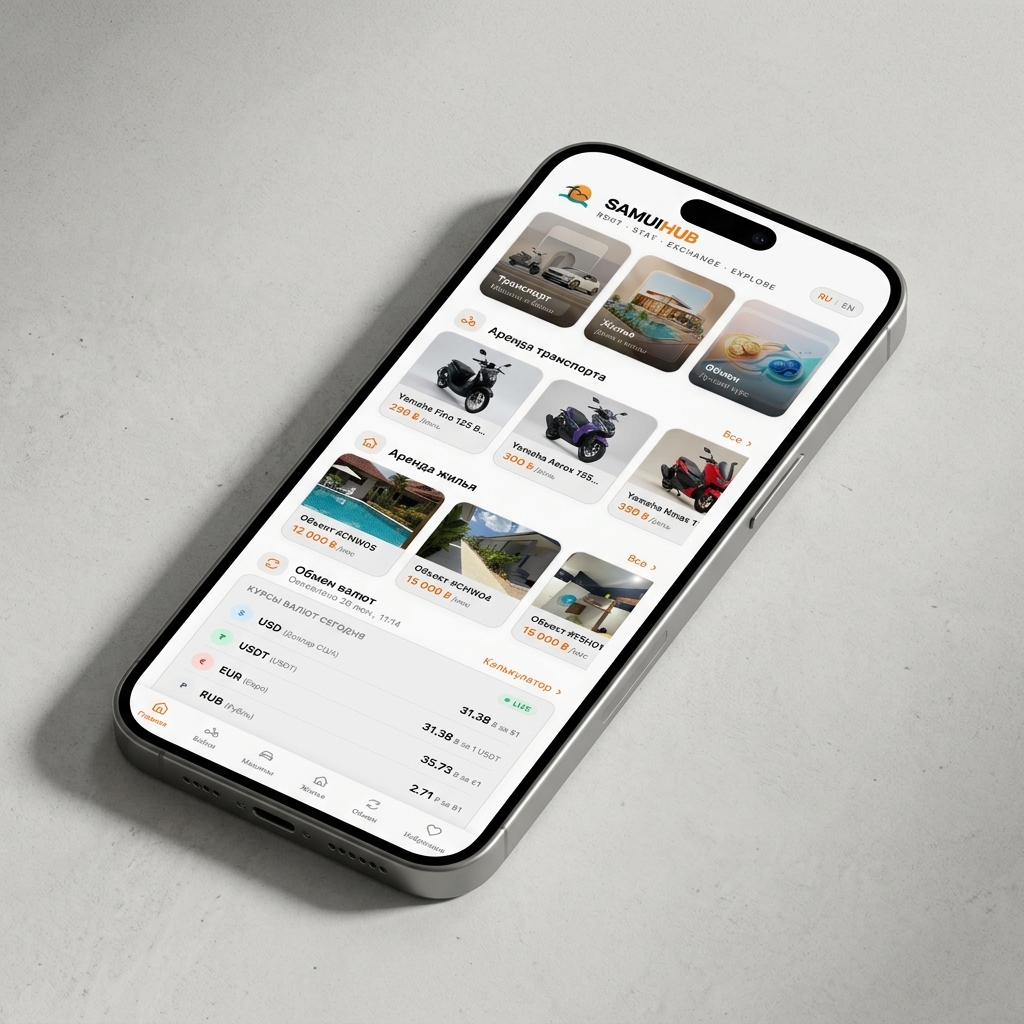
- Samui Hub Mini App: A tourist super-app aggregator channel that pulls the fleet catalog automatically.

Case Study 2: The TropicVibe Life Ecosystem
A luxury real estate agency in Koh Samui requires instant feedback on leads and strict data security.
The solution architecture includes:
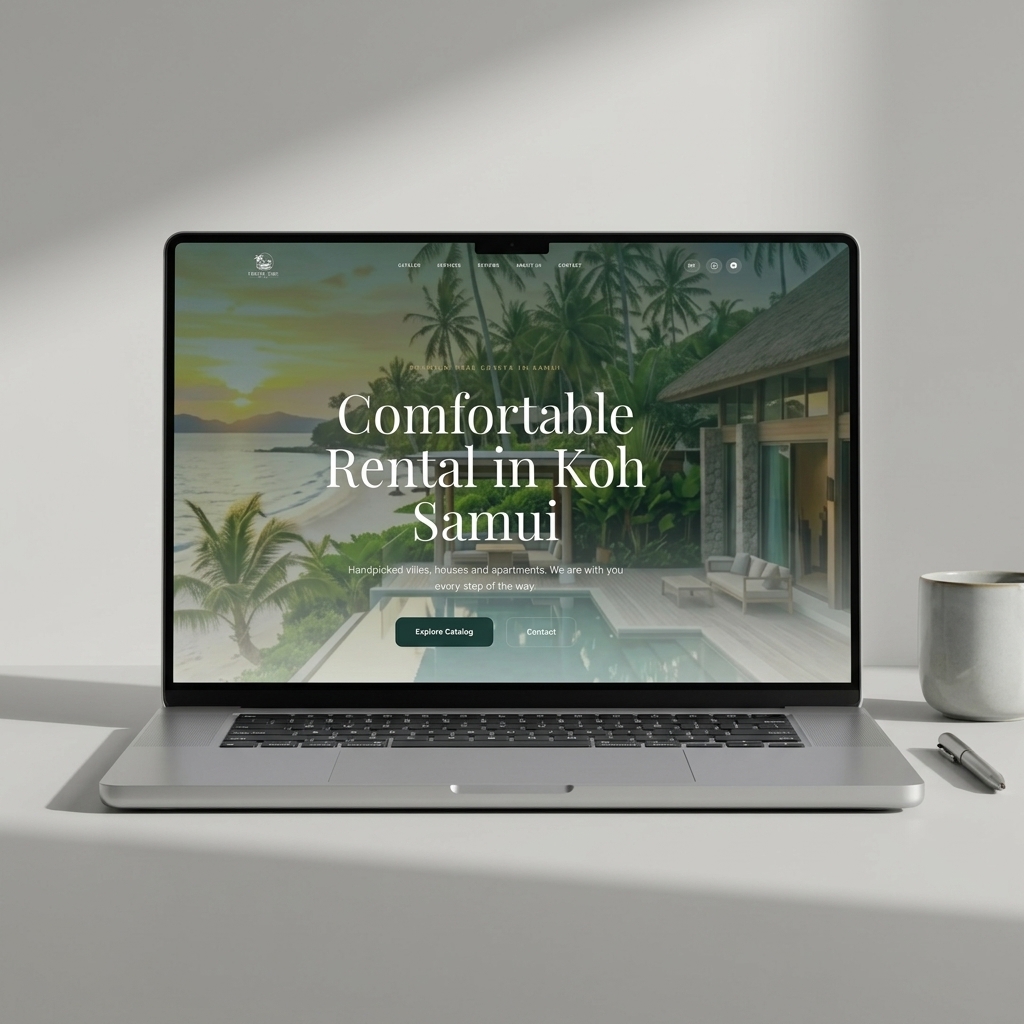
- Property Website (tropicvibe.life): A Next.js portal optimized with sharp image processing to load high-resolution villa showcases instantly.
- TropicVibe CRM: A secure agent workspace to manage property details, landlord contact cards, deal pipelines, and agent commissions.
- TropicVibe Bot: A Telegram utility integrated with an AI parser. Agents can add properties and client leads in chat using plain language inputs (e.g., 'add property villa Sea View 4 bedrooms' or 'add client Peter +7999...'). The bot also broadcasts new lead alerts from the site and generates secure magic login links for the CRM.
- Samui Hub Mini App: Automatically imports listings to tap into the local Telegram community app.
Synergy: The Samui Hub Aggregator
The true power of an integrated database setup shines when expanding. The active databases of JJRent and TropicVibe feed directly into Samui Hub (a Telegram Mini App). Samui Hub acts as a serverless Next.js 14 API Gateway, syndicating rental fleets and premium property listings into a single user interface, generating extra lead channels without manual data entry.
Pricing: 'All-Inclusive' Ecosystem for $1,000
Building a custom setup like this typically costs between $3,000 and $5,000 at agencies. Thanks to a refined core architecture and pre-integrated modules, I can offer premium terms:
Get the entire Website + CRM + Telegram Bot package for just $1,000.
What is included in the package:
- Full End-to-End Development: You receive a fully functioning, custom-coded website, CRM system, and Telegram bot, completely integrated.
- Branding & Brandbook: If your business lacks a logo or visual guidelines, creating a basic brandbook/identity (logo, fonts, colors) is included at no extra cost.
- No Hidden Fees: The $1,000 covers all development. Third-party expenses (domain registration and hosting) are billed directly to you (averaging $10–$25/month).
This proposal completely covers all technical business needs — from a service and commerce startup, to the automation of a fully mature business. You get a system built to run for years without issues or recurring CRM subscription fees.
Results Comparison
| Metric | Before Ecosystem | After Integrated Ecosystem |
|---|---|---|
| Rental contract generation | 15–20 minutes (written by hand on paper) | 1 minute via Telegram bot with auto-PDF print |
| Overbooking risk | High (tracked in spreadsheets / notebooks) | Eliminated (real-time calendar blocks in central DB) |
| Lead response speed | 10 minutes to several hours | Under 1 second (instant push alert to agent chat) |
| CRM staff authentication | Passwords (vulnerable to sharing or loss) | Passwordless Telegram Auth Widget & Magic Links |
| Field staff tracking & control | None (no logs on field activities) | Full control (field agents must record actions via Telegram with GPS and timestamp tags) |
| Business analytics & reporting | Manual calculations in spreadsheets at month-end | Real-time CRM dashboards: fleet load, commissions, margins, exchange volume |